


Retail Layout Reinstatement
Flathead Valley, Montana
- Existing layout surveyed
- ADA stalls corrected
- Directional arrows and fire lanes
Layout work on retail centers, schools, and industrial yards — with the ADA stall counts, paint specification, and layout drawings that reviewers check before approving a striping scope.
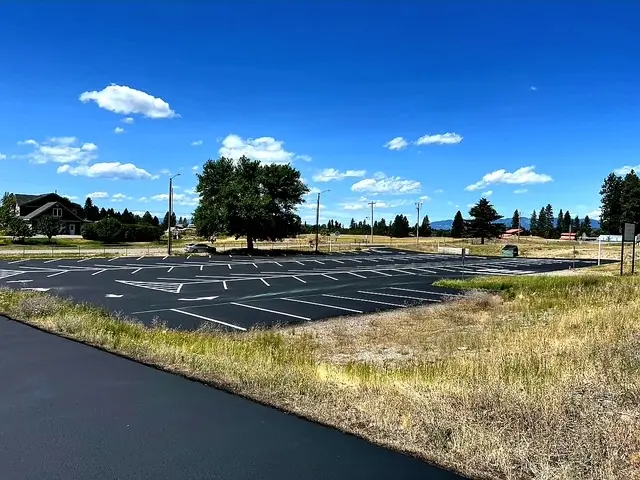
Stated up front so your reviewer can hold us to it — and compare it to whoever else bid.
Stall counts, aisle widths, and ADA ratios checked against current code before paint.
Traffic-grade acrylic or thermoplastic selected to surface, traffic volume, and plow exposure.
Access aisles, signage heights, and van-accessible ratios documented per completed lot.
Striped only after sealer cures, so lines bond instead of lifting the first winter.
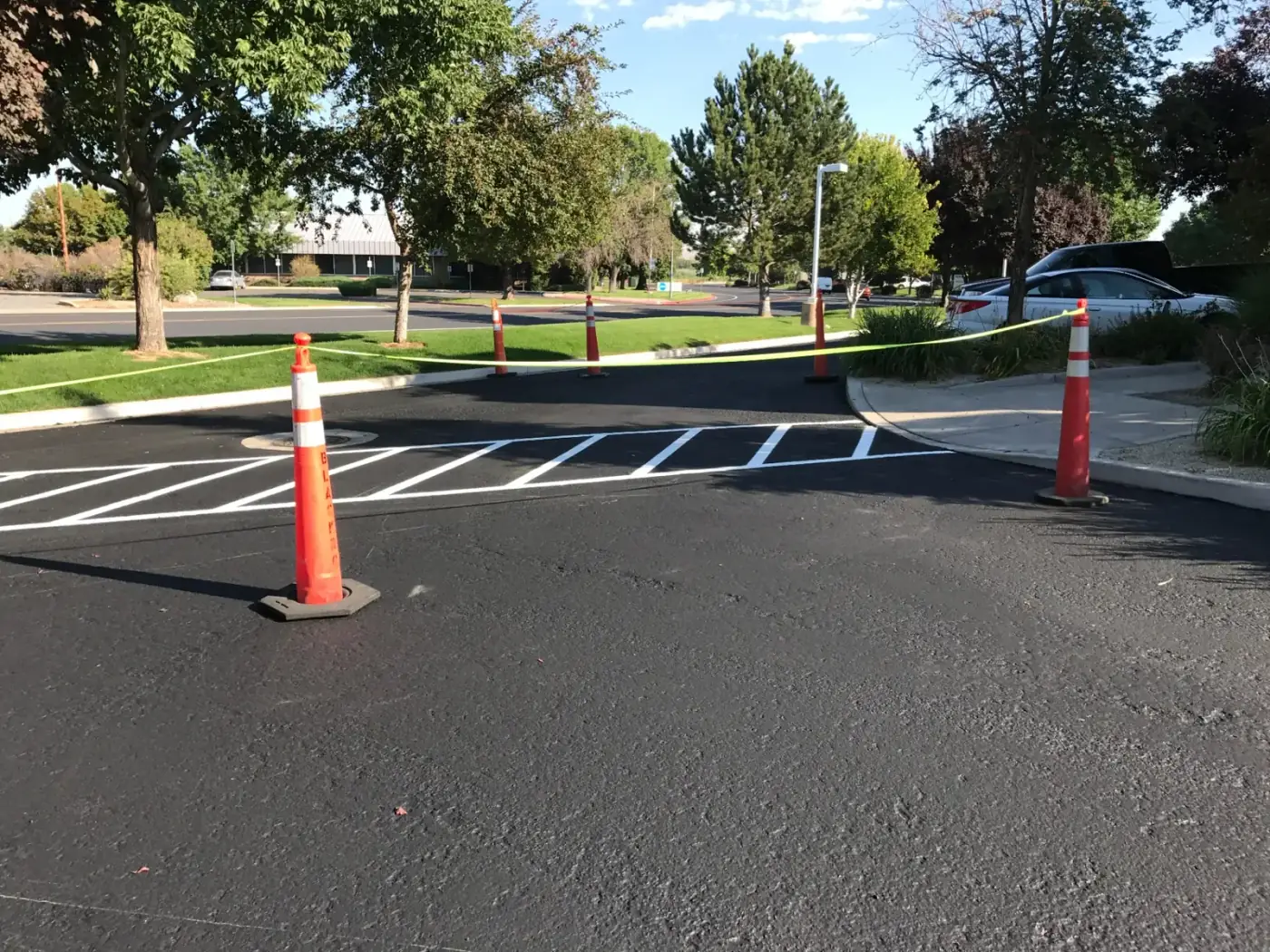
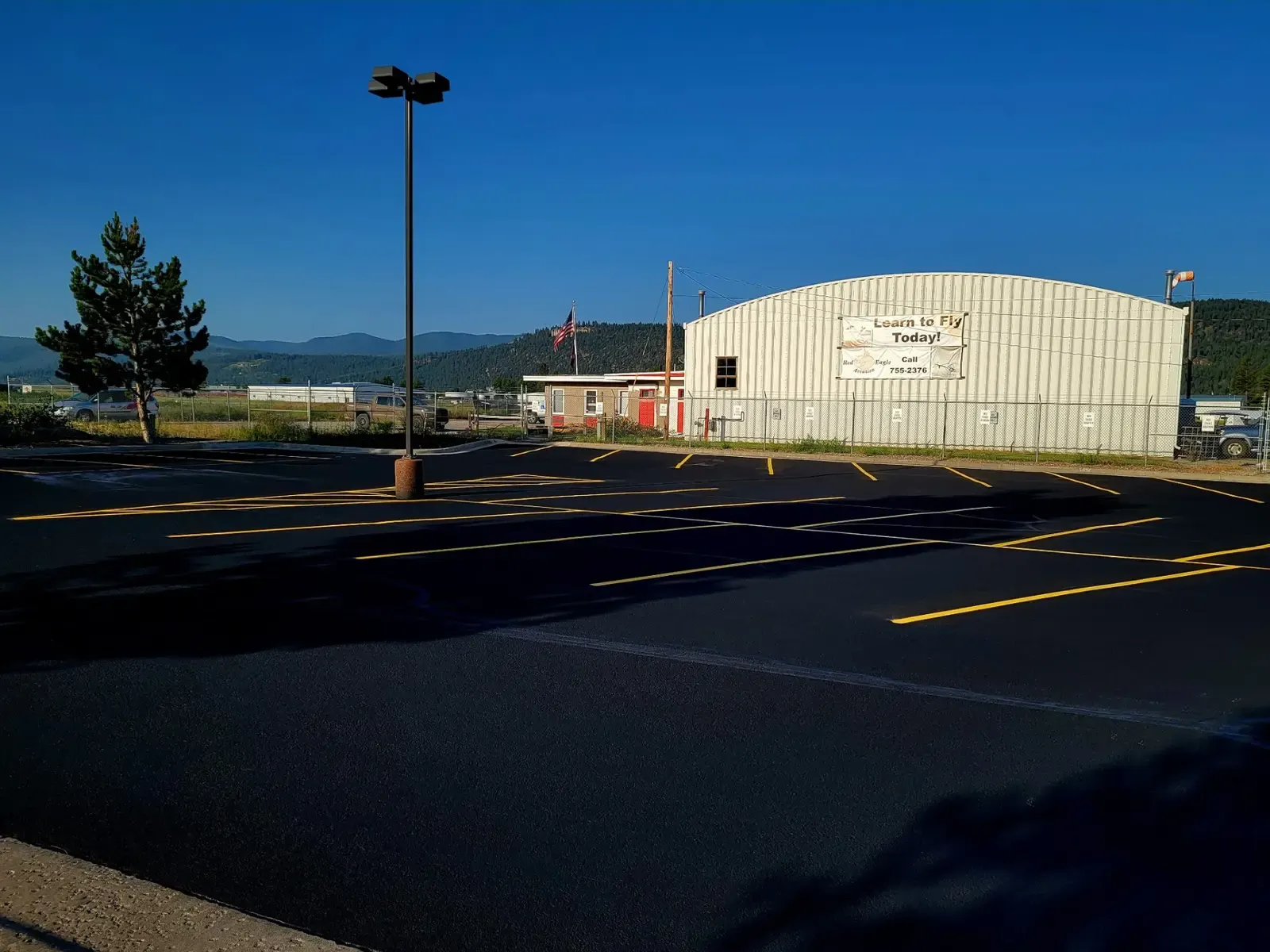
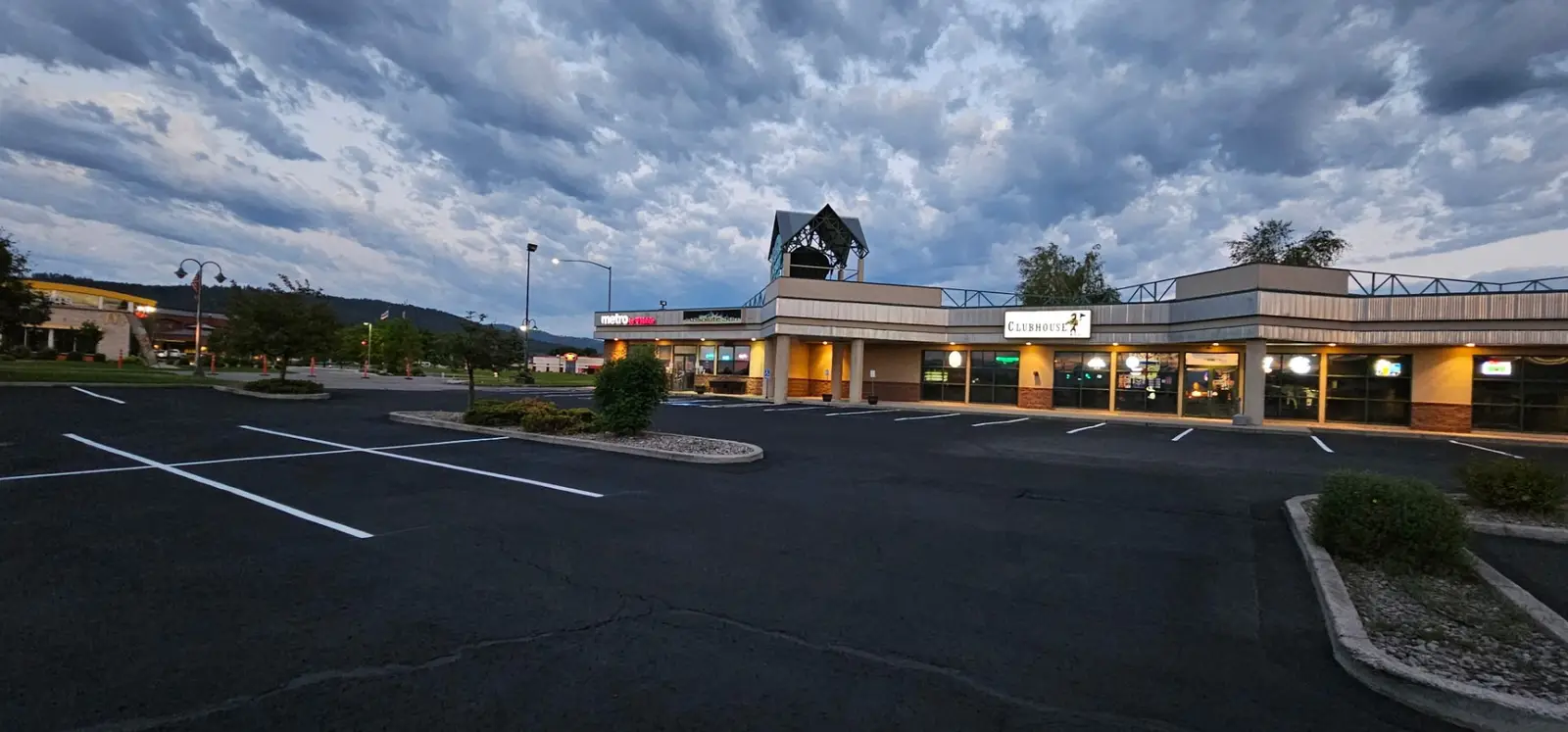
Representative before-and-after scopes showing the condition we start from and the finished surface. Illustrative of typical work, not a record of a specific client project.
Flathead Valley, Montana
Downloadable specs and safety data, plus the records issued with your project. Anything marked on request is returned the same business day.
Pick what your reviewer needs. Downloadable specs and safety data are emailed instantly; insurance certificates and project records are prepared and returned the same business day.
Running a formal procurement? Use the municipal & HOA bid intake to attach bid packets and deadlines.
Striping is quoted by stall count, linear footage, and layout complexity. Whether you're restriping an existing layout or laying out a new one is the biggest fork in the price.
Painting over a visible existing layout is fast. A new layout means measuring, chalking, and setting every line from scratch — often doubling the on-site time for the same lot.
The base measure of any striping job. Angled stalls consume more paint per space than 90-degree stalls, and double-line stalls add roughly half again the footage.
Accessible stalls, access aisles, and the associated signage and bollards carry specific dimensional requirements. Older lots frequently need stalls added or relocated to meet current standards.
Arrows, fire lanes, EV and reserved stalls, crosswalks, loading zones, and custom logos are each priced per marking on top of the base stall work.
Standard traffic paint is the baseline. High-build, thermoplastic, and reflective systems cost more up front and last substantially longer under plow traffic and Montana winters.
Usually a half to full day, with a short dry window
One to two days, phased by section
Scheduled around shifts, often nights or weekends
We quote from the actual site rather than a published rate card, because two lots the same size routinely scope out very differently. The site walk and the written proposal are free either way.
We lay out to current ADA stall ratios, access aisle widths, and signage requirements, and document what was installed. Formal certification is a jurisdiction function, but our drawing and photo record is what inspectors ask to see.
Sealer has to cure first — typically 24 to 48 hours depending on surface temperature and humidity. Striping earlier is the single most common cause of lines lifting in the first freeze cycle.
Yes. Most retail and medical properties are done in phases with cones and signage so a portion of the lot stays in service throughout.