
Featured
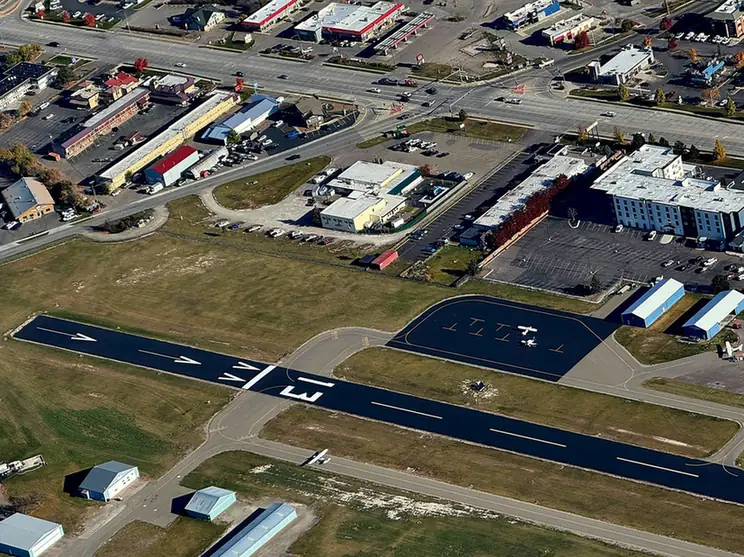
Pitch Black at Kalispell City Airport, From the Air
Our sealcoat work at Kalispell City Airport, and the photos a pilot sent us afterward.
Read the storyExpert knowledge on protecting your pavement investment. From seasonal maintenance tips to cost-saving strategies, learn why proactive care beats reactive repairs every time.
Stay informed with our latest insights on pavement maintenance, winter safety, and surface preservation.
Our sealcoat work at Kalispell City Airport, and the photos a pilot sent us afterward.
Read the story
How commercial asphalt paving works in Columbia Falls, MT: base, grading, paving, compaction, cold-weather limits, cost drivers and bid-ready scopes.
Read Article
Montana parking lot ADA requirements in plain terms: space counts, widths, access aisles, slopes, signs and what to do when you restripe or resurface.
Read Article
Parking lot restriping for property managers, HOAs and public buyers in the Northern Rockies: what the work covers, ADA rules, timing and how to scope it.
Read Article
Asphalt raveling repair for commercial lots in Montana and the Northern Rockies: how to rate severity, when to patch or seal, and when to resurface.
Read Article
How to select a paving contractor for a parking lot or HOA road: credentials to verify, how to compare bids, red flags and questions about the work itself.
Read Article
What drives parking lot sealcoating cost in Kalispell: lot size, crack repair, striping, season and scope. Learn to read a quote before you approve it.
Read Article
Learn how plowing, meltwater and freeze-thaw affect parking lot pavement, what to inspect after winter, and which repairs fit. Plan a spring assessment.
Read Article
Assess commercial asphalt cracks, choose sealing or filling, plan routing and cold-climate timing, and compare the scope and cost of repair bids.
Read ArticleRemove grease from concrete: blot fresh spills, treat old stains with degreaser, manage wash water and clear gum on Northern Rockies properties.
Read Article
Plan commercial asphalt paving in Kalispell: define scope, compare itemized bids, review seasonal timing and coordinate pavement repair and sealcoat.
Read Article
Parking lot drainage depends on slope and clear inlets. Review the 2% slope guideline, inlet types and upkeep for Northern Rockies asphalt lots.
Read Article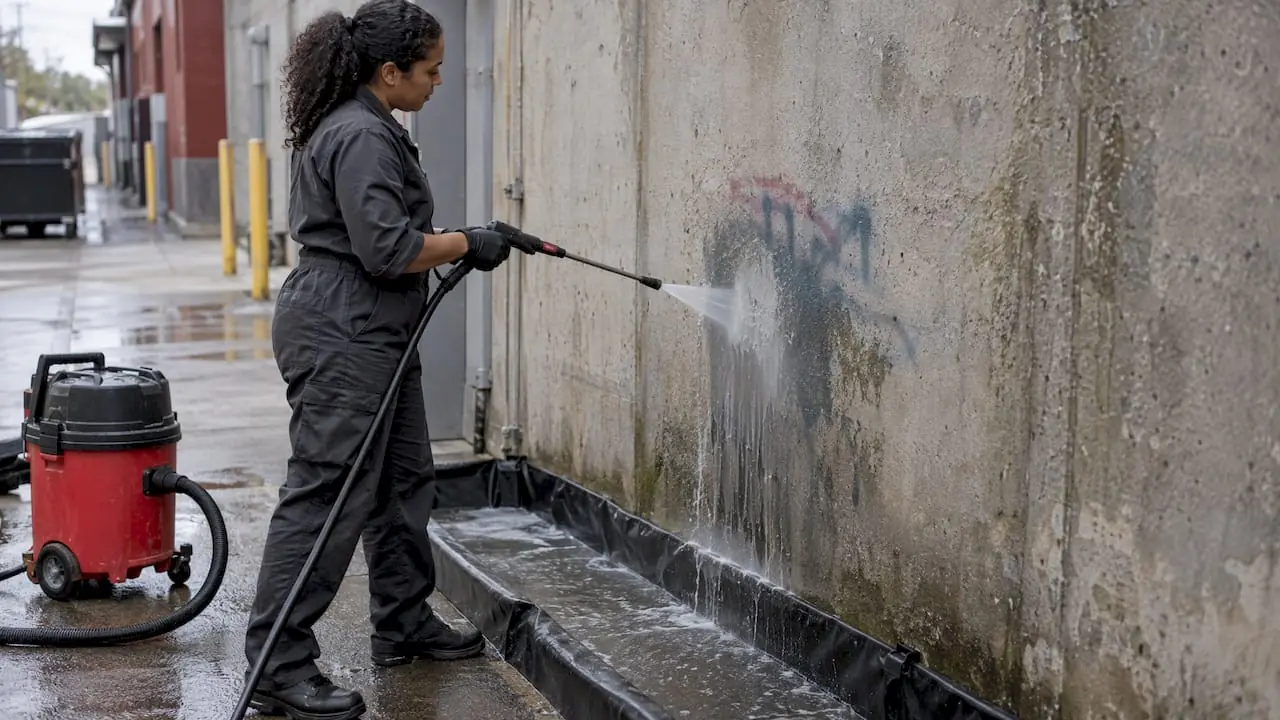
Remove graffiti from concrete with test patches, gentle cleaning, gel removers and low pressure. Learn wastewater rules and when to call a pro.
Read Article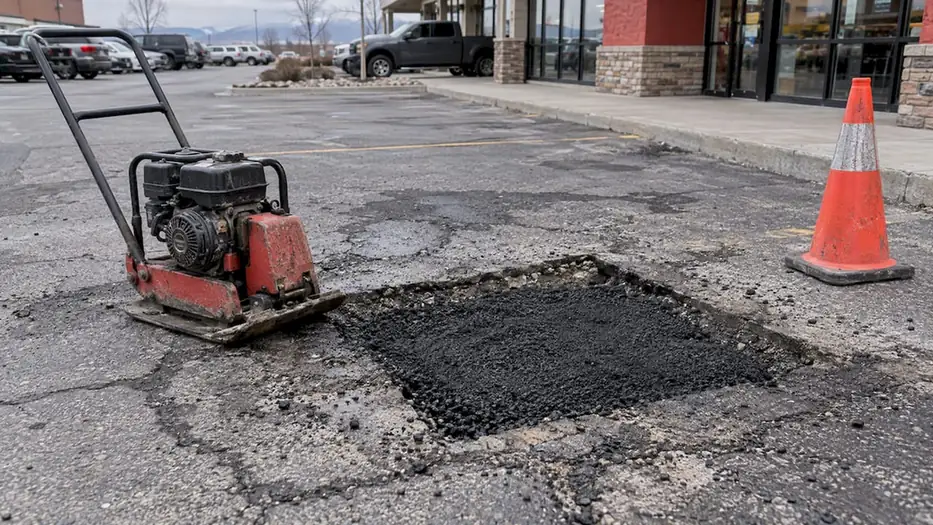
How commercial parking lot pothole repair is done right: cut-out and hot mix vs. stopgap patches, what drives cost, winter timing, and who is liable.
Read Article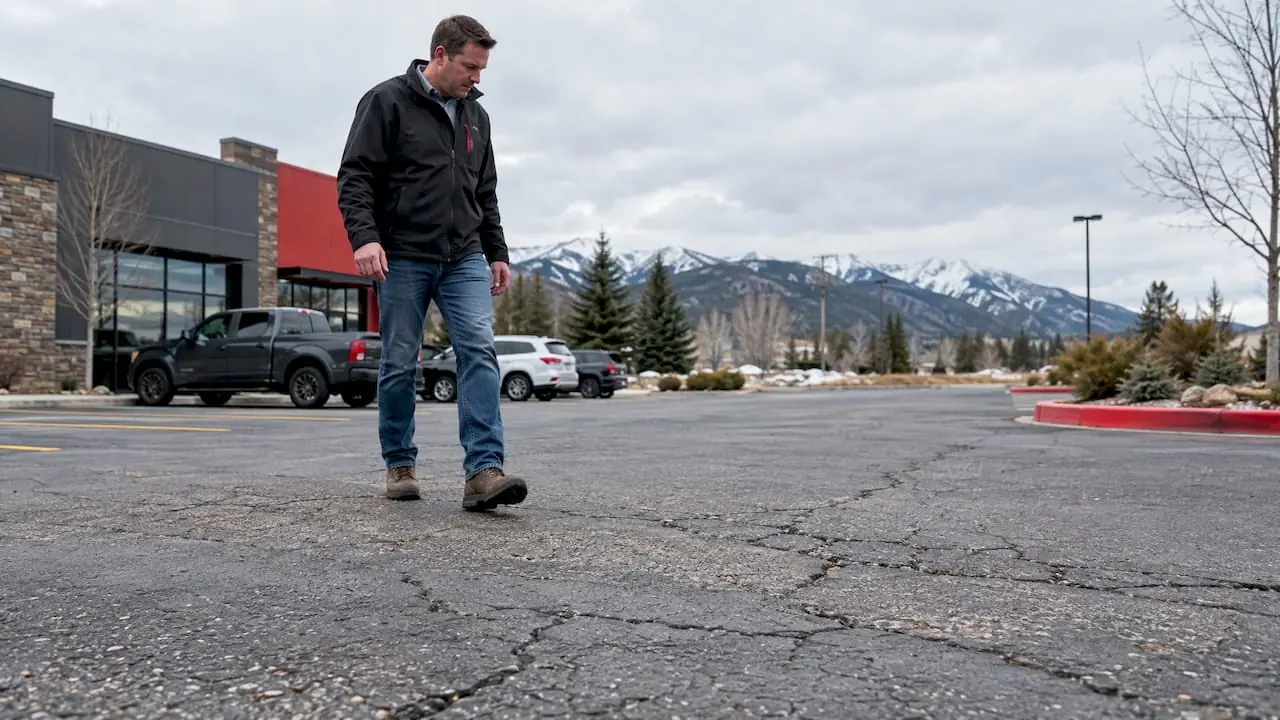
How pavement condition assessments work: distress types, PCI and PASER ratings, sampling, timing and bid-ready reports for parking lots and roads.
Read Article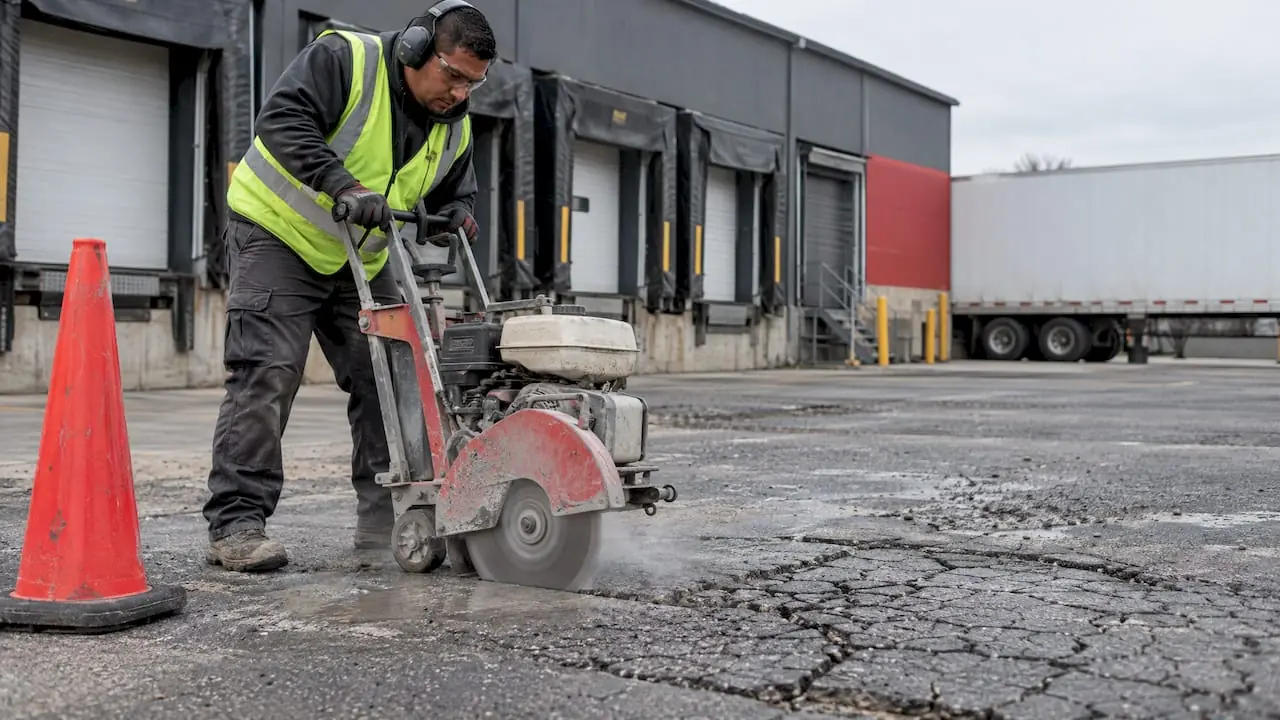
Identify alligator cracking, rate its severity and choose repairs: patching, full-depth dig-outs or overlays, plus prevention for commercial lots.
Read ArticleSealcoating protects a suitable pavement surface, but it cannot rebuild failed pavement. Use this guide to separate preservation, defined repair, and repaving scopes.
Spot repairs and full repaving solve different problems. Here's how to tell which one your pavement actually needs, how mobilization changes the math on small jobs, and how to phase a larger scope over more than one season.
Most paving bids are impossible to compare because they hide the assumptions that decide the price. These 17 line items show what is included and which exclusions move cost onto the owner.
Paving season in Northwest Montana is set by surface temperature, mat thickness and the length of the working day: not by a date on the calendar. Here's how the window actually works, and how to plan around it.
Montana pavement rarely wears out from the top down. It fails from the bottom up: water gets into the base, freeze-thaw cycles work it, and the surface finally shows what has been happening underneath for years.
Private-road paving is rarely a paving problem first. It's a governance problem: an inventory nobody has, a reserve study that guessed, and a board that has to explain a special assessment to neighbors.
"How many inches of asphalt do I need?" is the wrong first question. Thickness is an output of loads, subgrade strength and base depth: and the base usually matters more than the mat.
Plant-mix asphalt is climbing again going into the back half of 2026. For owners in the Northern Rockies, sealcoating is the cheapest insurance you can buy against the next repave bid: and the math gets sharper the farther north the lot sits.

Sandblasting has been the go-to surface cleaning method for decades. But dry ice blasting is an alternative for applications where substrate preservation, cleanup, and environmental impact matter.
What Flathead Valley business owners and property managers need to know before bidding commercial parking lot paving: scope, sequencing, access, accessibility and what a comparable bid looks like.
Most ADA writeups online are checklists. This one is the underlying reference: what the 2010 ADA Standards actually require for parking-lot striping, where the numbers come from, and what gets cited in a complaint.

Keep winter operations and pavement repair scopes separate. Document the lot before snow and inspect it again after the thaw.

Choosing the wrong sealer can cost you years of pavement life and thousands in premature reapplication. This asphalt emulsion sealer vs coal tar comparison gives you the comparison, with data, not marketing spin.
The inspection-based decision we walk Montana homeowners through: when sealcoating protects a sound driveway, when it cannot help, and when the structure itself needs work.
Most sealcoating advice on the internet was written for somewhere that doesn't freeze. In the Northern Rockies and Dakotas, freeze-thaw cycles do more pavement damage than traffic does: and the maintenance calendar has to reflect that, or the asphalt loses years off its life.
Real 2026 asphalt paving cost ranges for Flathead Valley driveways, HOA loops, and commercial lots: Kalispell, Whitefish, Columbia Falls, Bigfork, and Lakeside, with a real bid walk-through.
The 'every two to three years' rule is fine for an average lot. Almost no lot is average. Here's the real sealcoating frequency for the seven property types we bid most often: and why a church lot can stretch five years while a fuel-stop apron is overdue at eighteen months.

Not every cracked parking lot needs to be ripped out and replaced. But not every surface can be saved with sealcoat either. Here's how to make the right call, and save thousands in the process.

Your parking lot is your first impression. Research shows it directly impacts customer decisions, property values, and even lease rates. Here's the data behind curb appeal ROI.
Honest numbers on what parking lot striping actually costs in 2026. By stall count, by line, by lot. No calculator, no fake quote tool, just the same ranges we hand HOA boards and procurement teams before we bid.
The wrong fix on the right lot will cost you twice. Call for Pricing.
We sealcoat commercial lots for a living and we still tell homeowners which driveways are smart DIY jobs and which ones aren't. Here's the actual process, the materials that hold up, and the line between worth-your-Saturday and call-the-pros.
Most boards I've sat across from aren't trying to skip maintenance. They're trying to figure out which line item to fund this year and which one can wait. Here's how that conversation actually goes when the numbers are on the table.
Crude has been drifting lower since spring. Property managers keep asking the same question: does that mean my paving bid drops too? Short answer: kind of, eventually, and not as much as you'd think. Here's what to actually plan around.
Most parking-lot ADA violations aren't deliberate. They're old striping nobody re-measured when the lot got re-coated. Here's the 2026 checklist we use to walk a lot and tell an owner exactly what to fix before a complaint or a lawsuit shows up.

Summer is deep-cleaning season for commercial facilities. Here's why businesses are switching from pressure washing to dry ice blasting, and the results they're seeing.
A planning guide to where dry ice cleaning may fit after a fire, and the structural, odor, material, containment, and clearance decisions it cannot replace.

Montana summers routinely hit 90°F+, and your asphalt absorbs every degree. Here's the science behind heat damage and the maintenance playbook that stops it.
A high-level guide to evaluating dry ice cleaning within a qualified mold-remediation plan, without treating one cleaning method as the complete remedy.
A planning guide for assessing whether dry ice cleaning may fit electrical equipment, with isolation, manufacturer requirements, and facility authority review first.
A practical evaluation guide to dry ice cleaning for food equipment: where physical soil removal may fit and where sanitation, allergen, and QA controls still govern.
A practical framework for comparing dry ice cleaning with other methods using the equipment, contaminant, substrate, site controls, waste, and schedule.
Cone penetration, wet track abrasion, EPA Method 8310, 0.00 ppm PAH. A short FAQ that translates the Pitch Black spec sheet into plain English.
Cone penetration of 340mm. Wet track abrasion ≤35g loss. 0.00 ppm PAH. The Pitch Black spec sheet is dense, here is what each line actually means for the lot you are about to seal.
Most winter maintenance contracts in Montana are two pages of vague language and a price. Here's what a real commercial contract should actually specify — and why it matters when a slip-and-fall claim lands.

A 2026 jurisdiction-by-jurisdiction look at coal-tar sealer restrictions affecting MT, ID, WA, ND, and SD owners: and how to lock in a compliant asphalt-emulsion spec before the next bid cycle.

Every dollar of preventive sealcoating defers four to ten dollars of future repaving. Here's how that math actually pencils out for HOAs, commercial portfolios, and municipal road programs.

A storm-temperature-and-timing decision matrix that replaces the "brine vs. salt" debate with a smarter "which one, when, and why" playbook for the 2026–27 winter season.

For trucks, heavy equipment, and engine bays, choosing dry ice or pressure washing affects downtime and warranties. Compare the two methods by fleet application.

The single biggest predictor of a good paving outcome isn't the contractor: it's the RFP. Here's the template we wish every HOA board and public-works director used.
Municipal winter contracts get evaluated on the wrong criteria almost everywhere. Here's the checklist public works directors should actually use.
Anti-icing brine is what DOTs and airports switched to a decade ago. Here's why commercial property managers in MT and ID are now running the same playbook on parking lots.
Asphalt repair isn't one decision, it's a menu of five options with very different price tags and life expectancies. Here's the framework property managers need to make the right call.
Pavement doesn't fail because of one bad winter. It fails because nobody owns the maintenance calendar. Here's the annual plan that protects a commercial lot in Montana's climate.
Three contractors bid your parking lot. The low bid is 40% cheaper. Here's the vetting checklist that tells you whether you found a deal, or a problem waiting to happen.
The 275-gallon IBC tote is the workhorse format for small and mid-sized sealcoat crews. Here's what to look for before you buy your first one, or your fiftieth.
If you're a paving or sealcoat contractor in the Northern Rockies, your sealer supplier is your single biggest input-cost line. Here's how to source bulk pavement sealer without overpaying on freight or getting stuck with thin product.
The short answer is 'every 2–3 years.' The long answer depends on traffic, climate, sealer chemistry, and what condition you started in. The interval depends on conditions at the property.
Three national brands dominate the pavement-sealer category. One regional formulation is built specifically for the Northern Rockies. Here's the contractor-side decision framework.

How much should you budget for pavement maintenance in 2026? Real costs, smart scheduling, and ROI calculations for Montana, Idaho, and Washington property managers.
There are dozens of sealcoating contractors in Montana. A handful do the job right. Here's the checklist we'd hand a property manager who asked us how to vet the field, including us, without naming names.

Boating season is weeks away. Is your marina ready? From dock surfaces to boat ramp maintenance, here is how to protect your waterfront investment before the first boat launches.
We're honored to be featured in the Daily Inter Lake. Hannah Shields tells the story of Kodey and Tasha Van Horn, and the launch of Montana's first Pitch Black® sealcoat manufacturing plant.

Your pavement survived winter, but the real damage may be happening right now. Here is why spring traffic on weakened asphalt causes more destruction than the winter itself.

Faded parking lot lines create liability. Review the ADA requirements for commercial properties and how proper striping protects your business.

Nine years ago, we started with a truck, a squeegee, and a promise to outwork everyone. Here's the story of how Montana Sealcoat & Plow became Summit Surface Partners, and why the best is still ahead.

Big news for pavement professionals and property owners across the Northern Plains: Pitch Black® premium sealcoat is officially returning to Rapid City and expanding distribution to cover all of North Dakota, South Dakota, and deeper into Eastern Montana.

Decide between DIY and professional sealcoating by evaluating pavement condition, preparation, product requirements, weather, access, equipment, and scope.

Rock salt is cheaper per ton. But is it cheaper per lane-mile? Per storm? Per season? When you factor in waste, application speed, environmental compliance, and infrastructure damage, the numbers tell a very different story.

Spring brings warmer weather and potholes. Learn how freeze-thaw cycles create them, what liability property owners face, and which repairs last.

Dry ice blasting removes grease, grime, mold, and winter buildup without water, chemicals, or surface damage. The chemical-free cleaning method is FDA-approved.

After one of the harshest winters in recent memory, spring 2026 is the most important sealcoating season in years. Here's what the freeze-thaw damage means for your pavement and how to act before costs escalate.

Every year you delay pavement maintenance, costs multiply. This isn't scare tactics, it's math. See exactly how waiting transforms affordable maintenance into expensive reconstruction.

January planning gives property owners time to budget, assess winter damage, and schedule pavement maintenance for the year.

Dry ice blasting cleans without the equipment damage, hazardous waste, and lengthy downtime associated with traditional methods. Here's how it works.

The best ice management happens before ice forms. Learn proactive strategies that reduce liability, lower costs, and keep your property safer throughout winter.

Rock salt has been the standard for decades, but salt brine is revolutionizing winter maintenance. Learn why property managers and municipalities are making the switch.

The work you do in fall determines how your pavement survives winter. These essential preparation steps minimize freeze-thaw damage and reduce spring repair costs.

Customers form impressions before they enter your store. Research shows parking lot condition directly impacts shopping behavior and spending, here's what smart retailers know.

Montana and Idaho summers bring intense UV exposure that accelerates asphalt deterioration. Understanding heat damage helps you protect your investment before it's too late.

Your parking lot is often the first thing customers see, and it impacts their perception of your business. Learn how maintenance investments pay dividends beyond just pavement.

HOA boards face unique challenges balancing maintenance budgets with homeowner expectations. Discover how planned pavement programs reduce costs while keeping communities looking their best.

Small parking lot cracks can lead to pavement failure. Sealing them promptly prevents water damage and the expensive repairs that follow.

As winter snow melts away, it reveals the toll harsh weather has taken on your asphalt. Spring is the critical window for sealcoating, here's why waiting could cost you thousands.
Don't wait until small problems become expensive repairs. Contact us today for a free assessment.
Get Your Free Assessment