
Proof Center · Dust Control

    Dust Control & Road Stabilization Proof

    Gravel roads, subdivision access, industrial yards, and construction haul routes. Dust control is judged on application records and repeat performance across a season — so that's what we document.
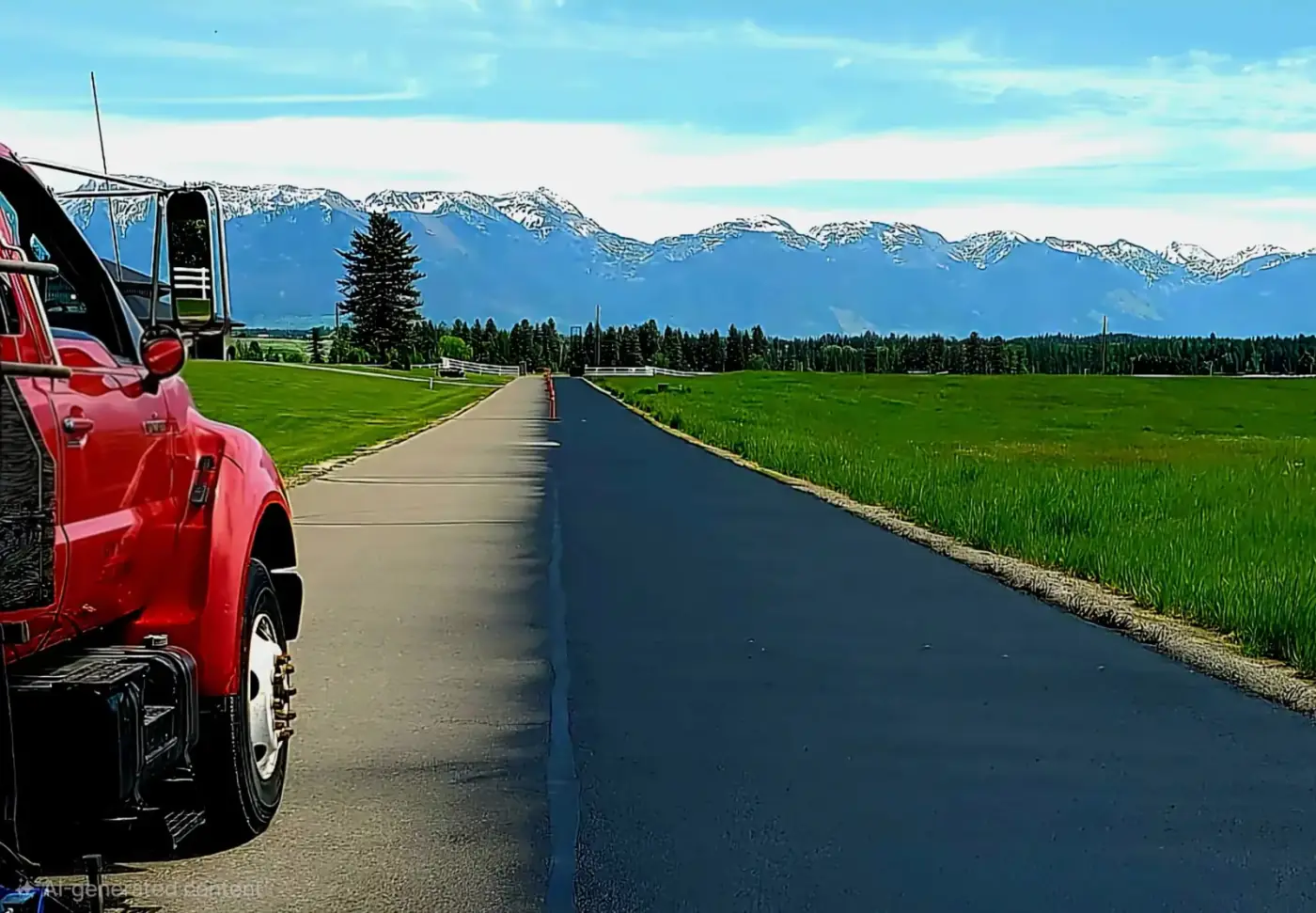
    Treated gravel mountain road in Montana with airborne dust suppressed after application
    Treated gravel road — suppression holding through the dry season.
    Applied Standards

    How Dust Control Work Is Held

    Stated up front so your reviewer can hold us to it — and compare it to whoever else bid.

    Rate control

    Application rate logged per pass and per segment, not estimated after the fact.

    Surface prep

    Grading and moisture conditioning before treatment so the binder holds in the road, not on it.

    Segment mapping

    Treated segments recorded by mile marker or address range for board and council reporting.

    Season planning

    Retreat timing planned to traffic count and rainfall, with a written follow-up window.

    Field Results

    Before & After

    Documented on real Montana and North Idaho properties, not stock photography.

    Untreated gravel subdivision road in Northwest Montana with heavy airborne dust
    Before — loose fines and heavy airborne dust on every pass.
    Gravel subdivision road after a metered dust control application with a bound surface
    After — bound surface and stabilized crown, logged by segment.

    Subdivision Access Road Treatment

    Northwest Montana

    • Grade and moisture condition
    • Metered application
    • Segment log issued to the board
    Mountain gravel access road treated on a seasonal dust control program
    Mountain access route treated on a seasonal program.
    Industrial yard surface stabilized against dust in Montana
    Industrial yard — stabilized traffic surface, rate logged per pass.
    Traffic control signage during a live-road stabilization application
    Flagging and signage during live-road application.
    Request Documentation

    Get the Dust Control Documents Sent to You

    Pick what your reviewer needs. Downloadable specs and safety data are emailed instantly; insurance certificates and project records are prepared and returned the same business day.

    • Emailed to you, not gated behind a sales call
    • No pricing required to receive documentation
    • Certificates issued naming your entity as certificate holder

    Running a formal procurement? Use the municipal & HOA bid intake to attach bid packets and deadlines.

    Which documents do you need?

    Downloadable specs and safety data arrive by email immediately. Insurance certificates and project-specific records are returned the same business day. No spam, no pricing gate.

    What Affects Your Price

    How Dust Control Is Scoped

    Dust control and road stabilization are quoted by treated area and application frequency. These are the factors that set how much material a road needs and how often we come back.

    Road length & width

    Treatment is calculated in lane-miles or total treated square yards. Wide haul roads and turnarounds consume materially more product than a narrow access lane.

    Raises cost
    Raises cost: Wide haul roads, large yards, turnarounds and pull-outs
    Keeps cost down
    Keeps cost down: Narrow, well-defined single-lane access roads

    Surface material & condition

    Well-graded gravel with good fines holds a treatment. Loose, washboarded, or fines-depleted surfaces need grading — and sometimes added material — before treatment is worth applying.

    Raises cost
    Raises cost: Washboarding, potholing, depleted fines requiring regrade or new aggregate
    Keeps cost down
    Keeps cost down: A recently graded, well-crowned surface

    Traffic volume & vehicle weight

    Loaded trucks break down a treated surface far faster than light traffic. Heavy-haul routes need higher application rates and more frequent reapplication.

    Raises cost
    Raises cost: Loaded haul trucks, high daily counts, continuous operation
    Keeps cost down
    Keeps cost down: Light residential or seasonal recreational traffic

    Application frequency

    A single knockdown pass before an event is very different from a season-long program with scheduled reapplications through the dry months.

    Raises cost
    Raises cost: Multi-application seasonal programs through a long dry season
    Keeps cost down
    Keeps cost down: One-time or event-driven treatment

    Distance & water access

    Product and water have to get to the site. Remote locations and sites without on-site water access add haul time to every pass.

    Raises cost
    Raises cost: Remote sites, no on-site water, long tanker runs
    Keeps cost down
    Keeps cost down: Sites near our service base with on-site water available

    What the Work Involves at Your Scale

    Private road or subdivision access

    • Pre-treatment grading assessment
    • Single or twice-seasonal application
    • Coordination with the HOA or road association

    Usually a single day per application pass

    Construction site or laydown yard

    • Haul route and yard treatment to meet air-quality requirements
    • Scheduled reapplication tied to the construction calendar
    • Documentation for compliance files

    Recurring passes across the active build season

    Industrial or municipal gravel network

    • Route-by-route prioritization and application mapping
    • Season-long program with scheduled reapplication
    • Usage and application records for the agency file

    Programmed across the dry season by route

    What You Get in Writing

    • Measured treated area by route or yard
    • Application rate and number of scheduled passes
    • Any grading or aggregate work needed first, listed separately
    • Documentation package for compliance and agency records

    We quote from the actual site rather than a published rate card, because two lots the same size routinely scope out very differently. The site walk and the written proposal are free either way.

    Questions

    Dust Control Proof FAQs

    What proof do we get that the road was treated at the specified rate?

    A segment log listing product, gallons per pass, treated segment, and conditions at time of application. It's issued after each visit and is the record most boards attach to their season file.

    How many treatments does a season usually take?

    Traffic count and rainfall drive it. Most residential subdivision roads run one primary application with a planned mid-season follow-up; haul routes and industrial yards need more frequent passes.

    Do you handle traffic control on live roads?

    Yes. Signage and flagging are included in the scope for public and shared-access roads, and the plan is stated in the proposal.